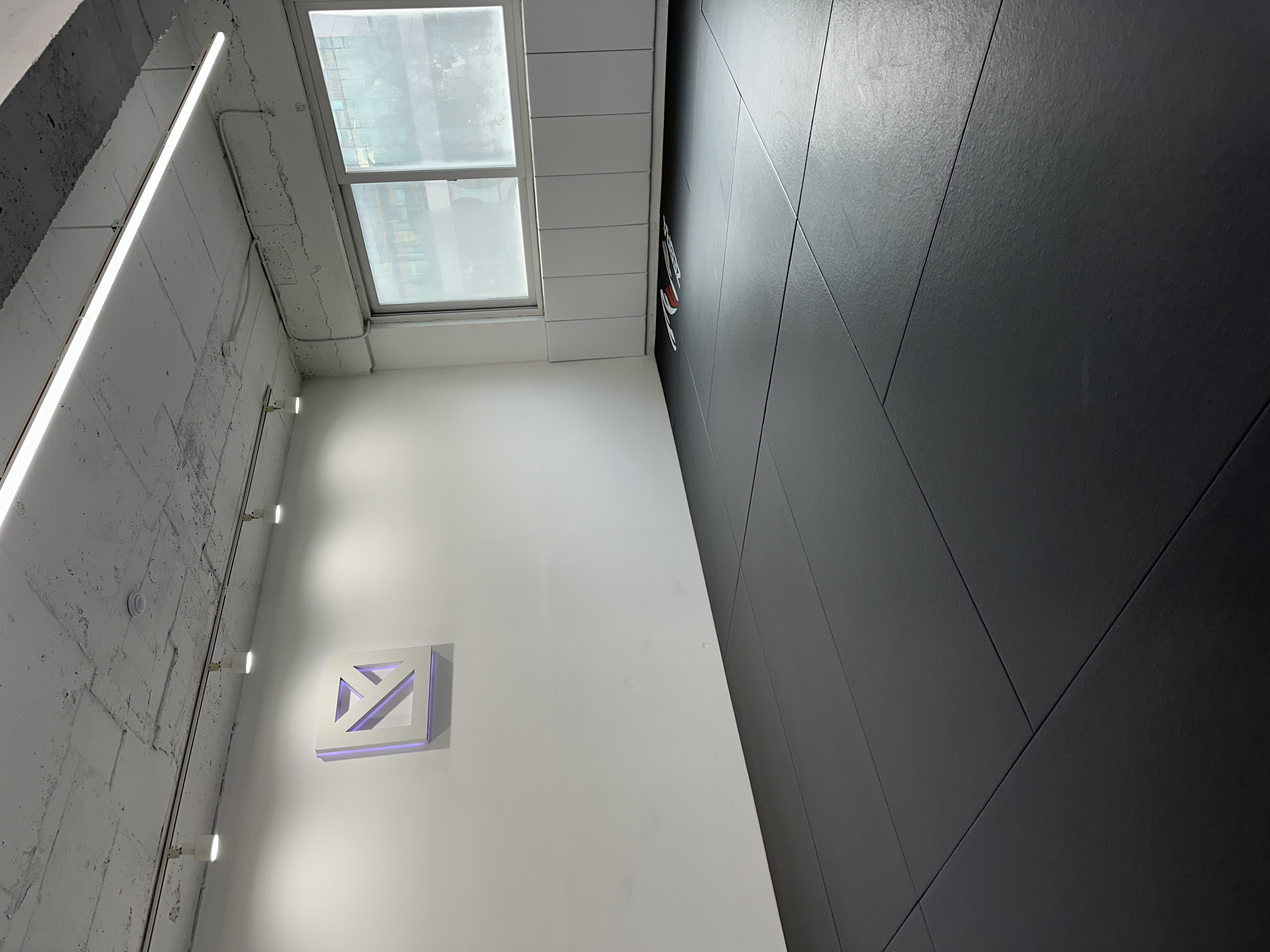
First Jiu-Jitsu Experience: Starting from the Worst Position
[Sequence Log 006]
First Jiu-Jitsu Experience:
Starting from the Worst Position
This week, I tried Jiu-Jitsu for the first time.
Before the trial, I had pain in my right palm and wrist, so I bought a 3,500 won wrist guard from a convenience store and wore it.
I was told that clothes with zippers weren’t allowed, so I wore a sweatshirt and training pants.
The instructor told us something that stuck with me:
“Survival instinct exists. You’ll try to use whatever you’ve learned somehow.”
Jiu-Jitsu is different from other exercises.
It starts from the worst position and gradually improves from there.
Compared to other exercises, you spend more time in close contact than standing, and since lying down doesn’t count as a penalty, you spend a lot of time on the ground.
1. Basic Movements: Spider Drill, Breakfall, Sit-up
― Learning to move on the ground
The class began with fundamental movements that would be used throughout the session.
Spider Drill
The first movement was the “spider drill”—switching hands and feet diagonally.
Right hand, left foot. Left hand, right foot.
Only diagonal switching is allowed.
Two movements complete one rotation, bringing you back to your starting position.

This simple movement was more challenging than expected.
Maintaining balance while switching diagonally required constant core engagement.
Breakfall and Sit-up
The instructor emphasized the importance of breakfall:
“When falling backward, your gaze must be on your navel, not the sky. This prevents concussion.”
The key point was protecting the back of the head.
The instructor explained that people instinctively look up when falling backward, which is dangerous.
The gaze should always be on the navel.
Sit-up in Jiu-Jitsu means lifting your hips off the ground.
It’s not about abdominal crunches, but about the movement of getting up from a lying position.
This position appears when you need to quickly stand up, sweep an opponent’s leg, or perform a takedown.
Technical Stand-up
The most impressive movement was the “technical stand-up.”
This is the movement of safely getting up when an opponent is in front of you.
The instructor explained:
“The most dangerous moment is when you’re getting up. That’s when you’re most vulnerable to attack.”
The movement involves:
- Breakfall
- Sit-up position
- Place one hand on the ground, keep the other hand in front for defense
- Create a triangle with your body
- Stand up and either attack or escape backward
The instructor used an interesting analogy:
“The most dangerous hairstyle for women is a ponytail. Why? Because it’s easy to grab. When does it get grabbed? When you’re running away or getting up and turn around. That’s when you’re most vulnerable.”
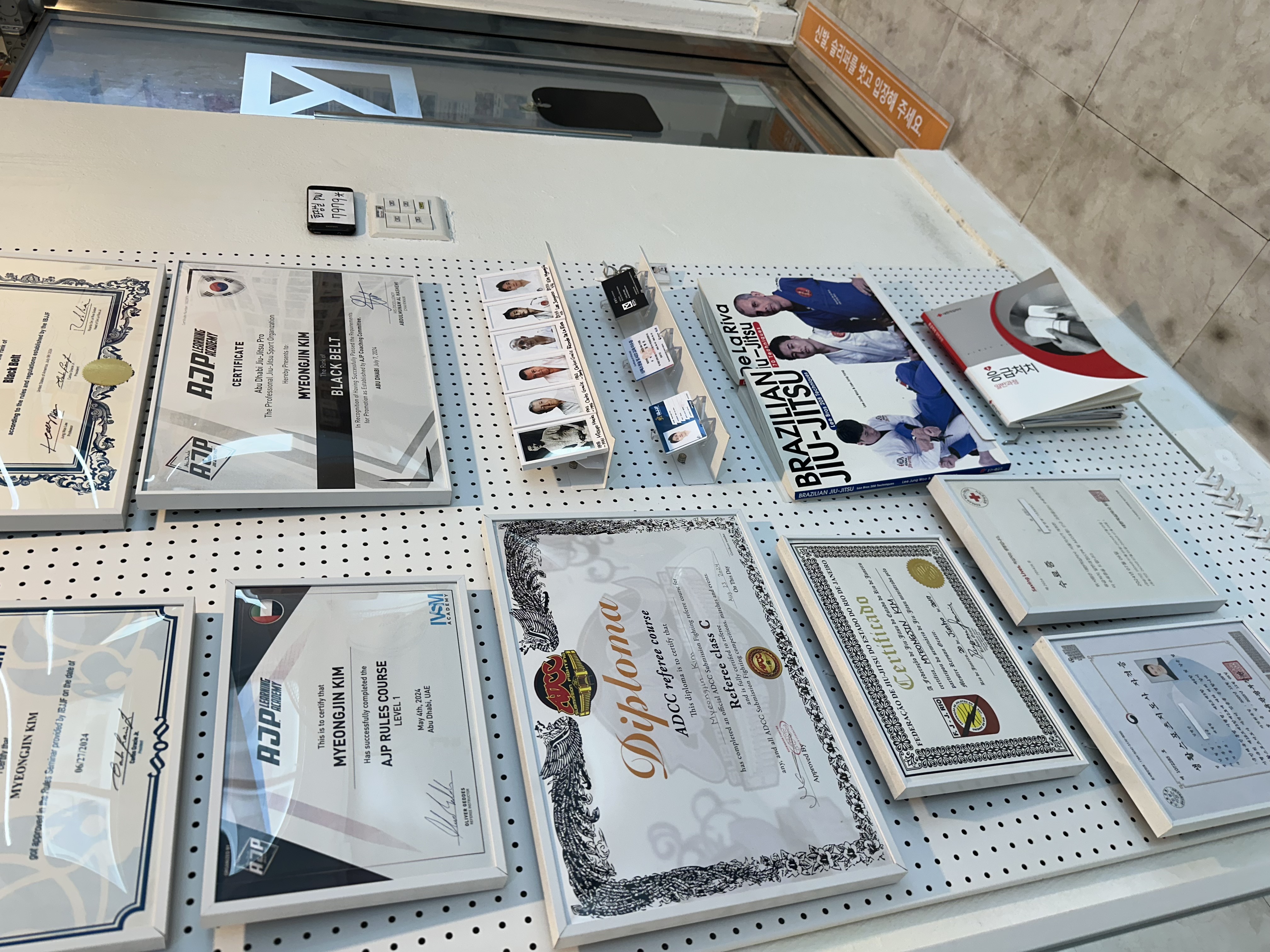
2. The Philosophy of Jiu-Jitsu: Starting from the Worst
― Survival instinct and the triangle principle
The instructor explained the core philosophy of Jiu-Jitsu:
“Jiu-Jitsu is family recreational sports. Self-defense is something you should learn at least once.”
Unlike other martial arts or exercises, Jiu-Jitsu starts from the worst possible position—lying on the ground with an opponent on top of you.
The instructor emphasized:
“Anyone can fight when standing. But the most dangerous situation is when you’re lying down and someone is on top of you, trying to attack. That’s the worst situation. Jiu-Jitsu goes there—to the worst situation—and works backward. You escape from the opponent, sit up, stand up, and then face them to attack or escape.”
This reverse approach was fascinating.
Instead of focusing on subduing the opponent, the focus is on surviving the worst situation and escaping, or even reversing it.
The Triangle Principle
The instructor explained a key principle:
“When three points form a triangle, you can stand up. When you’re lying down, you need to create a triangle with your shoulders, elbows, and hips. That’s how you can control your body.”
This principle appeared in every movement:
- Spider drill: creating a triangle with diagonal hand-foot positions
- Sit-up: shoulders, elbows, and hips forming a triangle
- Technical stand-up: creating a triangle to stand up
The Reality of Human Disasters
The instructor made a striking point:
“The probability of human disasters is incomparably higher than natural disasters. The chance of being involved in a human disaster—including fraud and accidents—is much higher than dying from a natural disaster. Remember that.”
This perspective shifted my understanding of self-defense.
It’s not about being paranoid, but about being prepared for realistic risks.
3. Mount Position Escape Training
― One minute, three rounds, and an injury
The most challenging part was the mount position escape training.
I had to try to escape from under an opponent who had two years of MMA training and a blue belt.
He was 10kg lighter than me, but it was still extremely difficult.
I had to do this three times, one minute each.
In the end, I couldn’t escape.
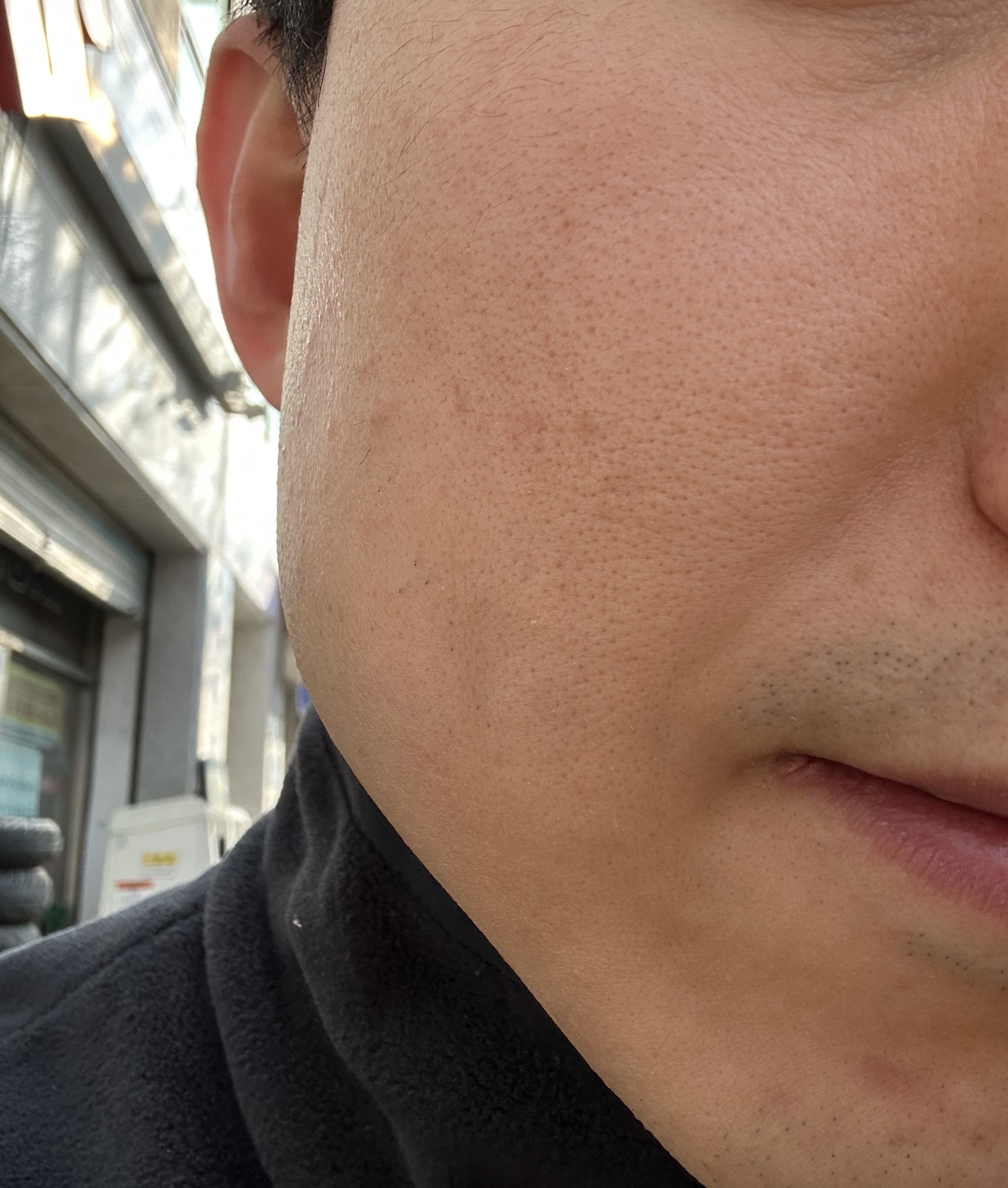
During the process, my face was scraped against the opponent’s gi, causing an injury.
Fortunately, my shoulder was okay.
The instructor explained:
“When you’re lying down and someone is on top of you, your body can’t be controlled. It’s like a person who can’t swim falling into water. Swimming is also a skill. If you learn it, anyone can do it. It’s the same. The movements feel unfamiliar and difficult only because you haven’t experienced them.”

This training made me realize that Jiu-Jitsu uses a different kind of stamina than standing or high-intensity interval training.
You need to use irregular bursts of strength in short periods.
Especially when trying to escape from the mount position, I felt this intensely.
4. Mount Reversal Technique
― Escaping and reversing the position
The instructor taught us a mount reversal technique.
This was the only technique we learned, but it was enough to understand the principles of Jiu-Jitsu.
The technique involves:
- When the opponent’s hand touches the ground, grab it
- Lock the arm and leg on the same side
- Bridge and reverse the position
- Now you’re on top
The instructor explained:
“After just one minute of learning this, you’ll try to use it. That’s human instinct. You have to survive. When a person is drowning, they become calm right before death. They think about how to survive one last time. That’s survival instinct.”
I experienced this during the training.
Even though I only learned one technique, I found myself trying to use it during the sparring rounds.
The survival instinct kicked in.
5. Final Thoughts: Worth Trying, But with Concerns
― The reality of starting Jiu-Jitsu in your late 30s
After the trial, I had mixed feelings.
Positive aspects:
- It seems like a worthwhile exercise to try at a nearby gym
- Many people continue practicing even as they age
- Techniques accumulate over time, which is appealing
- It’s family-friendly recreational sports
Concerns:
- The risk of injury seems higher than other exercises like boxing, CrossFit, or squash
- Starting in your late 30s has its challenges
- There aren’t many exercises where smaller, younger people can dominate larger, older people. Enduring that process is part of the training, but it’s not easy.
What I found disappointing:
- Since it was a trial class, the program was designed to make you feel the power of Jiu-Jitsu
- There was a lot of promotion of Jiu-Jitsu’s advantages throughout the class
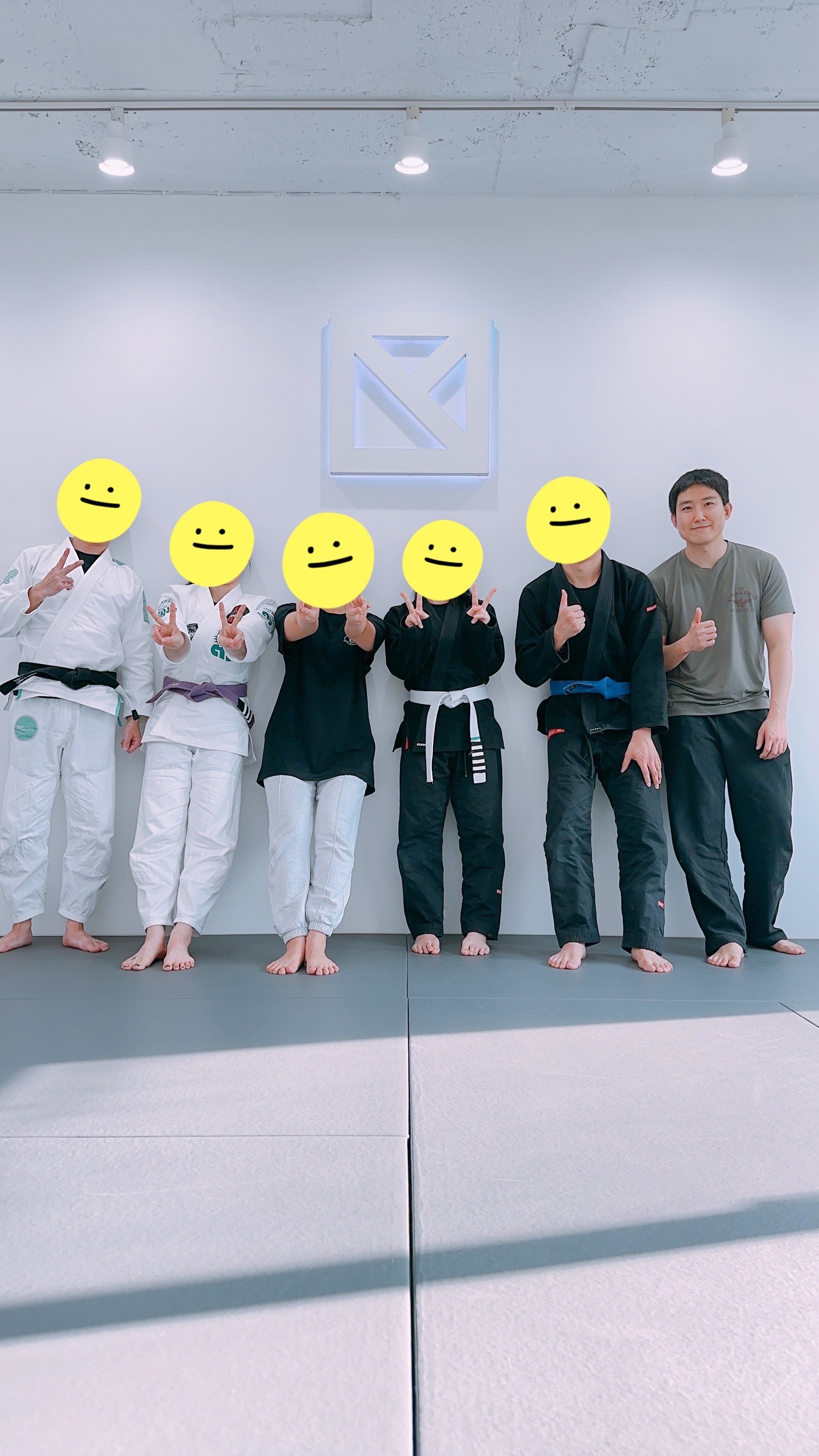
The instructor’s final words stayed with me:
“Anyone can start Jiu-Jitsu anywhere, and if you practice long enough, anyone can approach and train technically. Regardless of age, gender, or body size. The oldest person I’ve trained with was born in 1945. I’ve also trained with first-grade elementary school students. Overseas, it’s called ‘family Jiu-Jitsu.’ It’s the only martial art culture where families pass it down to each other and go to the gym together. There’s no hobby happier than this.”
[Next Sequence]
This sequence was
a time to experience
the philosophy of starting from the worst position
through the new experience of Jiu-Jitsu.